

 Bahasa Indonesia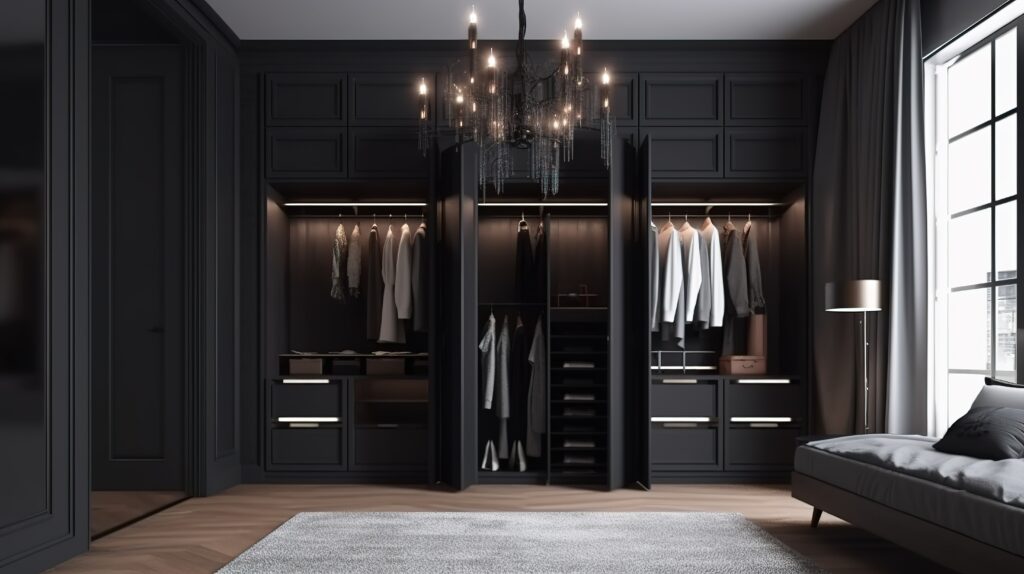
In residential interior planning, a walk-in closet is no longer merely a trend, but part of spatial planning that considers function, comfort, and aesthetics simultaneously. Its presence is often associated with a more organized lifestyle and the need for optimal storage solutions.
So, what exactly is a walk-in closet, and why has it become increasingly popular?
Definition of a Walk-in Closet
A walk-in closet is a clothing storage space designed large enough for users to enter and move around inside. Unlike conventional wardrobes that function as standalone or built-in furniture, a walk-in closet is an integrated part of the spatial layout, typically connected to a bedroom or another private area.
Inside, it usually features a combination of open shelving, hanging systems, closed drawers, shoe compartments, and accessory display areas. All of these elements are designed to facilitate organization while maximizing storage capacity.
The Function of a Walk-in Closet in Interior Planning
From an interior design perspective, a walk-in closet serves more than just a storage function. It plays several important roles.
Storage Optimization
With modular systems and clearly defined zones—for example, for formal wear, casual wear, shoes, and accessories—a walk-in closet helps create a more structured storage system.
Transition Area and Dressing Space
Walk-in closets often function as private dressing areas. The addition of full-height mirrors, focused lighting, and small seating elements can enhance comfort when selecting outfits.
Supporting a Visually Organized Bedroom
By centralizing clothing storage in a dedicated space, the primary bedroom can appear cleaner and more organized without the dominance of large wardrobes.
An Aesthetic Element That Enhances Spatial Value
Material finishes, lighting design, and hardware details in a walk-in closet can serve as design statements. In many cases, this space is designed with the same level of attention as the main rooms, regardless of the overall design concept applied.
Differences from Conventional Wardrobes
The fundamental difference lies in scale and spatial integration. Conventional wardrobes are typically standalone or built-in furniture with limited dimensions. Access is only from the front, and storage capacity depends on the cabinet size.
In contrast, a walk-in closet is a dedicated space that allows movement within it. Its storage system is more flexible and can be tailored to the user’s needs, whether in terms of the size of their collection or organizational preferences.
Additionally, walk-in closets are often part of a primary bedroom suite concept, making them more than just storage areas, but also part of the overall private spatial experience.
Considerations Before Designing a Walk-in Closet
Before deciding to incorporate a walk-in closet, several factors should be evaluated during the design stage:
- The available space and its proportion to the bedroom
- Ventilation and lighting, both natural and artificial
- Storage requirements based on the occupant’s lifestyle
- The selection of durable and low-maintenance materials
Careful planning ensures that a walk-in closet is not only visually appealing but also highly functional in the long term.
An Investment in Residential Comfort
Ultimately, a walk-in closet is about comfort and the quality of spatial experience. For occupants with extensive clothing collections or high organizational needs, this space can be an ideal solution.
With proper design, a walk-in closet not only improves storage efficiency but also strengthens the overall interior character of a home.
