

 Bahasa Indonesia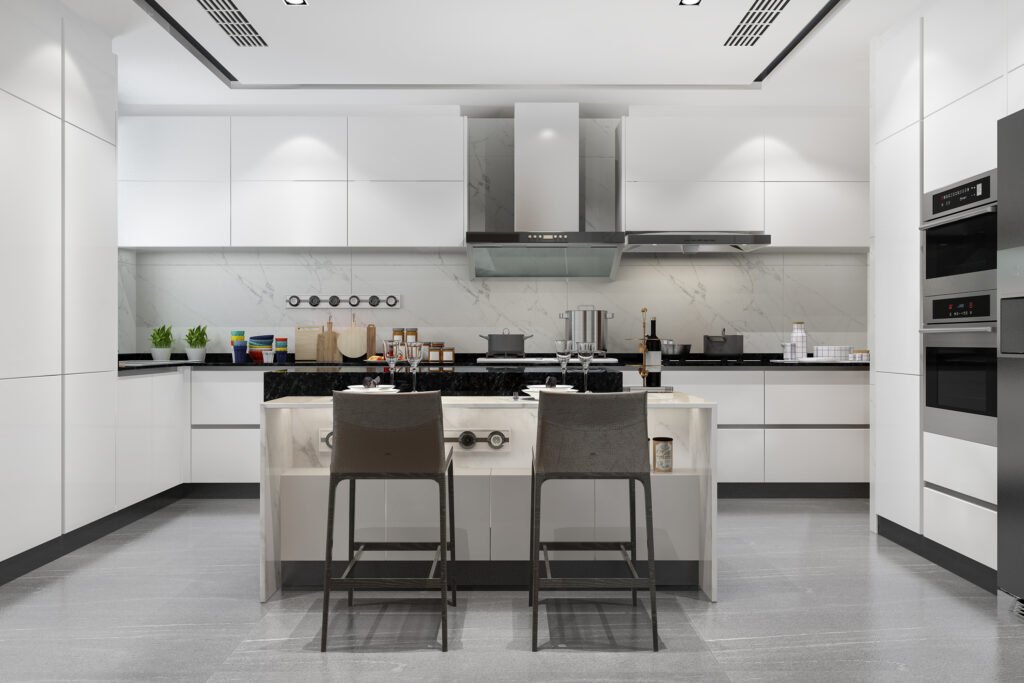
In modern residential design, the kitchen is no longer seen as a single, unified space. Separating wet and dry kitchens has become a strategic design approach to improve activity efficiency, visual comfort, and overall spatial quality.
Below is an explanation of the differences between wet and dry kitchens from a design and space-planning perspective.
1. Nature of Activities Within the Space
A wet kitchen is designed to accommodate high-intensity activities. Processes such as washing raw ingredients, handling oily cooking, and cooking with high heat are the main functions of this area. Therefore, a wet kitchen must be able to withstand water splashes, oil residue, and food waste.
In contrast, a dry kitchen has a cleaner and more controlled activity profile. This area is used for light preparation, serving, and activities that produce minimal residue, making it more comfortable for interaction.
2. Relationship Between the Kitchen and Social Areas
Conceptually, the wet kitchen is more private and functional, which is why it is often positioned separately from the main living areas. This helps maintain visual cleanliness and limits the spread of cooking odors.
On the other hand, the dry kitchen is designed as an extension of social spaces, such as the dining room or living area. Visual openness is a key element, allowing residents and guests to interact freely without being disturbed by heavy cooking activities.
3. Design Approach to Circulation and Comfort
A wet kitchen requires wider circulation paths due to the number of activities and appliances used simultaneously. Its layout is planned to ensure efficient workflow without interference.
Meanwhile, a dry kitchen prioritizes visual comfort and ease of access. Movement paths are kept simple so that anyone can easily take food or drinks without entering the wet kitchen’s work zone.
4. Material and Finishing Selection
Materials used in a wet kitchen focus on durability. Surfaces that are heat-resistant, water-resistant, and easy to clean are prioritized to ensure long-term performance despite intensive use.
In a dry kitchen, material choices allow for more design exploration. Premium finishes, color play, and refined design details are often applied to harmonize the kitchen with the overall interior style of the home.
5. Appliance Composition Within the Space
A wet kitchen accommodates primary appliances with larger sizes and heavier functions, such as the main stove, oven, full-size refrigerator, and a spacious sink area. These elements support the entire cooking process from start to finish.
In a dry kitchen, appliances are selected more selectively. Typically, only supporting equipment such as a coffee maker, toaster, mini refrigerator, or dedicated storage for serving ware is placed in this area.
6. Maintenance and Daily Use Patterns
Due to its high usage intensity, a wet kitchen requires routine and consistent maintenance to remain hygienic and comfortable for daily use.
In contrast, a dry kitchen has lighter maintenance requirements. Minimal food residue makes the area easier to keep clean while maintaining its aesthetic appearance over time.
Closing
Separating wet and dry kitchens is a design solution that combines functionality, comfort, and aesthetics within a home. With proper planning, the kitchen becomes not only a place for cooking, but also a space that supports a modern lifestyle.
