

 Bahasa Indonesia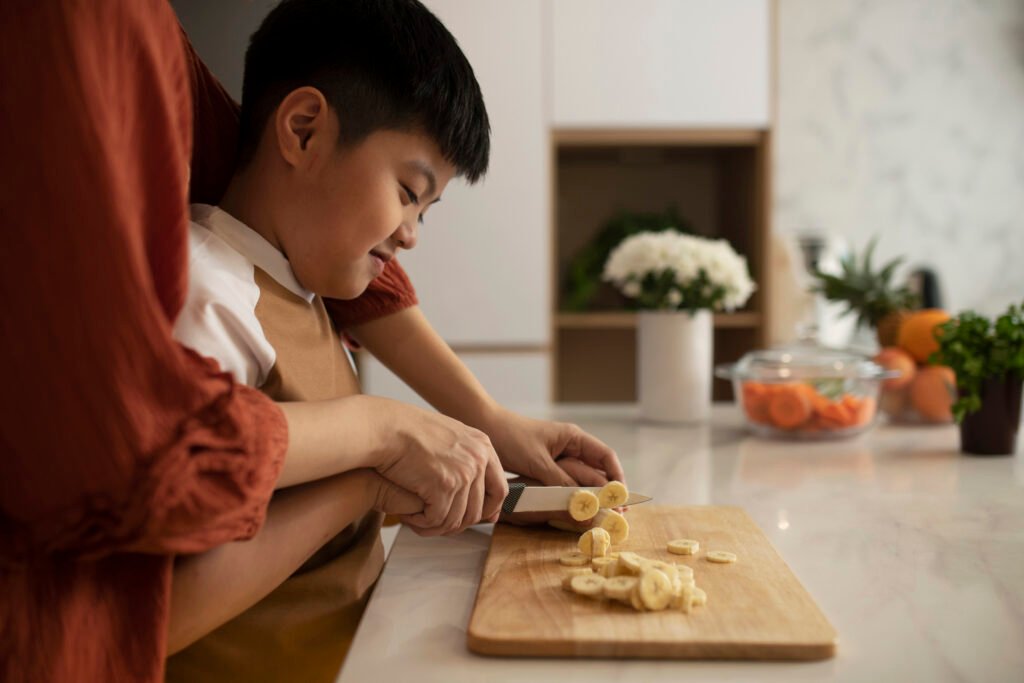
For some parents, inviting children into the kitchen may sound tiring. Cooking can take longer, the kitchen may get messy, and attention has to be divided. However, behind all the hassle, there are many benefits children can gain from cooking together.
Through this activity, children not only watch the cooking process but also learn many small things that have a big impact on their growth and development. Everything is done while playing, without pressure, and feels more enjoyable.
Reasons Why Cooking with Children Is Worth Trying
1. Children Learn to Be Involved and Feel Appreciated
When children are invited to help prepare meals, they feel involved in adult activities. Simple tasks like washing vegetables or pouring ingredients make children feel trusted.
This feeling is important for building a child’s self-confidence. They feel that their presence matters and their efforts are appreciated, even if the results are not neat or perfect.
2. Children Become More Open to Trying New Foods
Children who are involved in the cooking process are usually more curious about the final result. They want to taste food they helped make themselves, even if they were previously uninterested in the dish.
Parents can use this moment to introduce new foods, especially vegetables or healthy home-cooked meals. Without pressure, children slowly learn that trying new foods can be fun.
3. Trains Patience and Understanding of Process
Cooking teaches children that not everything can be done quickly. They learn to wait, follow steps, and understand that there is a process before enjoying the final result.
For example, waiting for water to boil or for a cake to finish baking in the oven. From this, children begin to learn self-control and understand the concept of time in a simple way.
4. Adds Knowledge Through Everyday Activities
The kitchen can become a fun learning space. Children get to know different food colors, cooking aromas, and various textures when touching or preparing ingredients.
Parents can also chat casually while cooking, such as explaining the function of ingredients or asking for the child’s opinion. Interactions like this help children learn without feeling like they are being taught.
5. Quality Time Without Gadget Distractions
Cooking together gives parents and children a chance to focus on each other. Without screens, communication feels warmer and more natural.
In these moments, parents can listen to their child’s stories, joke around, or simply enjoy being together. Simple moments like these have a big impact on building emotional closeness.
6. Introducing Routine and Responsibility from an Early Age
By frequently cooking together, children begin to understand that preparing food is part of family routines. They learn that every family member can help according to their abilities.
This habit gradually builds independence and a sense of responsibility, without the need for strict rules.
Tips to Keep Cooking Together Safe and Comfortable
To make cooking together run smoothly, parents can pay attention to the following points:
- Choose a relaxed time and avoid cooking in a rush.
- Prepare ingredients and utensils before inviting children to join.
- Assign light tasks that match the child’s age.
- Keep children away from sharp objects and heat sources.
- Always supervise children while they are in the kitchen.
Cooking with children is not about achieving perfect results. What matters most is the process of togetherness and the valuable experiences children gain from these moments.
