

 Bahasa Indonesia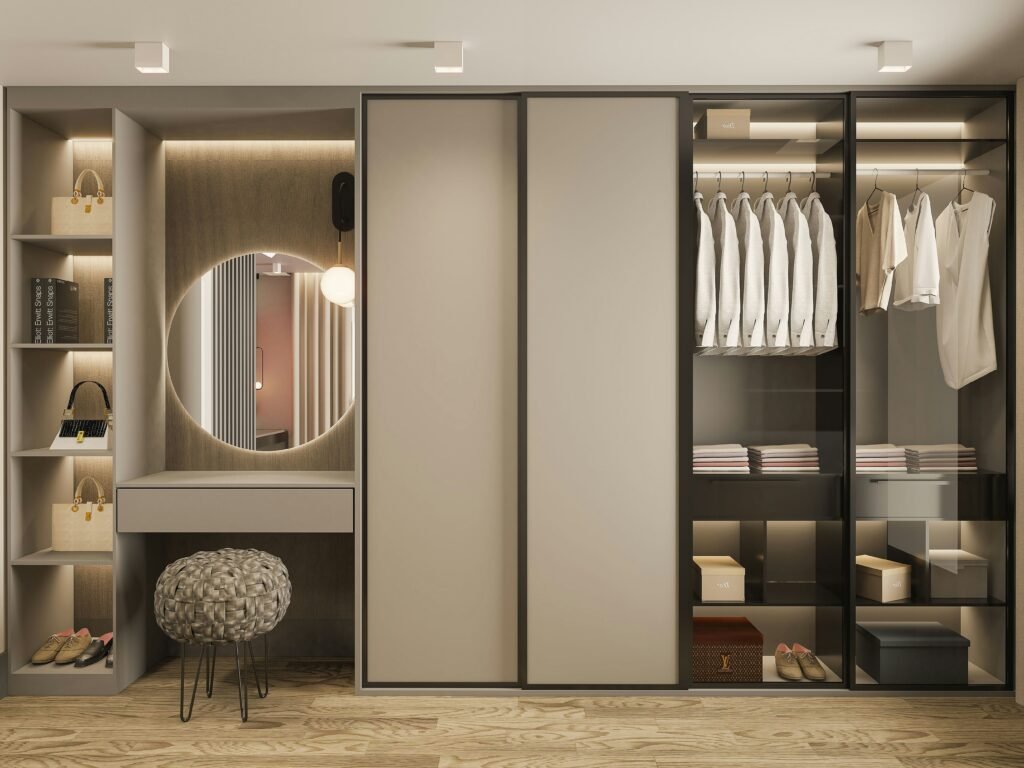
In interior design, furniture plays a role beyond basic functionality. It contributes to spatial comfort, visual balance, and the overall character of a room. In the bedroom, storage systems are particularly important, as they strongly influence whether the space feels calm and organized or cluttered and overwhelming.
A bedroom is meant to be a place of rest. Without proper storage planning, however, clothing and accessories can easily accumulate and disrupt the atmosphere. For this reason, wardrobes are no longer seen as standalone furniture pieces, but as integrated elements of interior design that should be considered from the early planning stage.
From Conventional Wardrobes to Open Systems
Traditional wardrobe designs have long followed a similar format. Enclosed structures with fixed shelves and doors were primarily intended for storage, with limited flexibility or consideration for daily access. While this type of wardrobe is still widely used, changing lifestyles and spatial needs have encouraged new design approaches.
One of these is the open wardrobe system. In this concept, side and back panels are often omitted, leaving a structural framework that supports shelves, drawers, and hanging rails. Visually, this creates a lighter and more open impression, while allowing greater adaptability to the user’s needs.
Walk-in Closets as Functional Spaces
Walk-in closets represent a further development of modern wardrobe systems. Unlike conventional wardrobes, a walk-in closet is designed as a dedicated space, commonly integrated with the bedroom and, in many cases, connected to the bathroom.
Its function extends beyond clothing storage. A walk-in closet accommodates activities such as selecting outfits, changing clothes, and organizing accessories in a more comfortable and spacious environment. The size of the room determines how multifunctional it can be, ranging from a compact storage area to a fully equipped dressing space.
Efficient Layout and Accessibility
Walk-in closets are generally designed with open shelving systems that occupy two or three sides of the room, often forming a U-shaped layout. This configuration allows users to view their entire collection at once and access items easily without the need for doors.
Storage zones are typically organized based on item categories, including hanging areas for garments, shelves for folded clothing, drawers for accessories, and dedicated compartments for bags and shoes. With thoughtful planning, the space becomes both efficient and intuitive for everyday use.
Materials and Lighting Details
Materials and detailing play a crucial role in contemporary wardrobe design. Panels, hinges, drawer systems, and accessories are selected not only for their appearance, but also for durability and ease of use.
Lighting is equally important in defining the character of the space. Integrated lighting within shelves or hanging areas improves visibility while enhancing the overall aesthetic. Beyond its practical function, lighting helps present collections neatly and adds depth to the interior composition.
Wardrobes as Part of a Lifestyle
With a more personalized design approach, wardrobes and walk-in closets can reflect the lifestyle and preferences of their users. Storage systems are no longer generic solutions, but are tailored to individual habits and daily routines.
The result is a space that feels organized, efficient, and comfortable to use. Modern wardrobes do more than store belongings—they contribute to a calmer, more structured bedroom environment.
