

 Bahasa Indonesia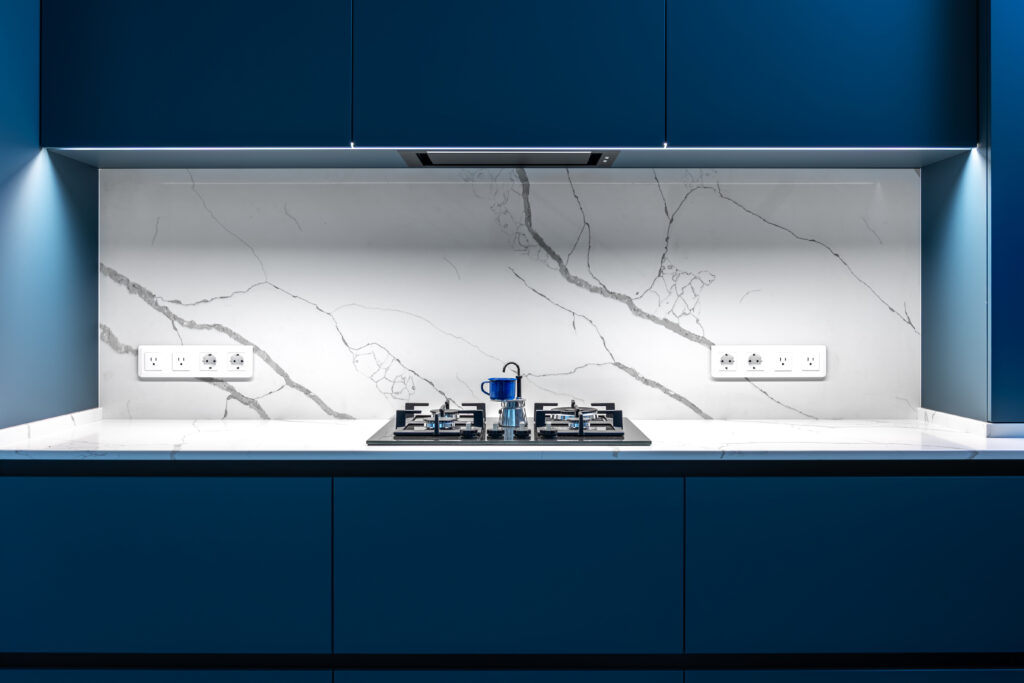
In kitchen planning, a backsplash is often seen as an additional element. In fact, this surface plays an important role both functionally and aesthetically.
A backsplash is a wall covering located between the countertop and the upper cabinets, or extending to the ceiling in certain designs. This area is considered an active zone because it is most frequently exposed to water splashes, oil, steam, and heat during cooking.
For that reason, selecting a backsplash should not be based on appearance alone. The material must be able to protect the wall while also integrating with the overall design concept of the space.
The Main Functions of a Backsplash
1. Protection for the Work Area
The area behind the stove and sink is the most vulnerable to stains and moisture. Without proper covering, walls can quickly become dull, damp, or even develop mold.
A backsplash serves as a protective barrier against water, oil, heat, and impact from kitchen utensils during cooking activities.
2. Easier Maintenance
Backsplash surfaces are generally designed to be easy to clean. Splashes and stains can be wiped away immediately without damaging the main wall surface.
This becomes especially important in kitchens with high usage intensity.
3. Strengthening the Visual Character
Beyond functionality, a backsplash also plays a role in reinforcing the kitchen’s visual identity.
It can blend seamlessly with the countertop for a clean, unified look, or be designed in contrast as a focal point. The choice of color, texture, and installation pattern greatly influences the overall atmosphere of the space.
Criteria for an Ideal Backsplash
Before selecting a material, consider the following aspects:
- Water and moisture resistance
- Easy maintenance
- Heat resistance near the stove area
- Proportionate to the size of the space
- Harmonious with the countertop and cabinetry
If the countertop already features a strong pattern, the backsplash should be more subtle to avoid visual clutter. On the other hand, if the overall kitchen design is neutral, the backsplash can become a more expressive element.
Balance is key.
Material Options and Their Characteristics
Tile
The most flexible material, offering a wide variety of sizes, shapes, colors, and installation patterns.
Advantages:
- Water and heat resistant
- Wide price range
- Easy to match with various design styles
Grout details also affect the final appearance. Matching grout creates a seamless look, while contrasting grout highlights the pattern.
Natural Stone (Marble and Granite)
Provides an elegant impression with unique natural veining. Often installed in large slabs for a minimal joint appearance.
Advantages:
- Premium look
- Seamless appearance
- Durable and strong
However, some natural stones are porous and require periodic maintenance.
Mirror
Used to create the illusion of a larger and brighter space by reflecting light.
Suitable for clean kitchens or those using electric stoves. Not recommended in areas with open flames at close range.
Glass (Backpainted or Film Glass)
Offers a sleek, neat appearance with minimal visible joints.
Advantages:
- Water resistant
- Easy to clean
- Customizable colors
- Available in gloss or matte finishes
Ideal when paired with natural stone countertops for a clean and elegant impression.
Solid Surface
A synthetic resin-based material with a seamless, joint-free finish.
Advantages:
- Non-porous
- Easy to maintain
- Minimal and clean look
Reasonably heat resistant, but not recommended for direct exposure to open flames at close distance.
Stainless Steel
Commonly used in professional kitchens due to its high durability.
Advantages:
- Highly heat resistant
- Hygienic
- Easy to clean
- Long-lasting
Suitable for kitchens with intensive cooking activities, especially high-heat techniques.
Choosing Based on Lifestyle
Backsplash selection should not be trend-driven alone but adjusted to lifestyle.
If cooking activities are intensive and involve frequent frying, choose materials that are heat resistant and easy to clean.
If the kitchen is used for lighter activities, material options can be more flexible from an aesthetic perspective.
Ultimately, a backsplash is not merely a wall covering. It is a design element that influences comfort, cleanliness, and the overall character of the kitchen.
A small detail, but one that significantly impacts the quality of the space.
