

 Bahasa Indonesia
In interior design, choosing wardrobe doors is often seen as a minor detail, even though it actually has a significant impact on spatial comfort and the overall look of a bedroom. The two most commonly used door types are sliding doors and swing doors. Each has its own distinct character and is suitable for different spatial needs. Understanding their differences helps in making the right choice, both functionally and aesthetically.
Sliding Doors
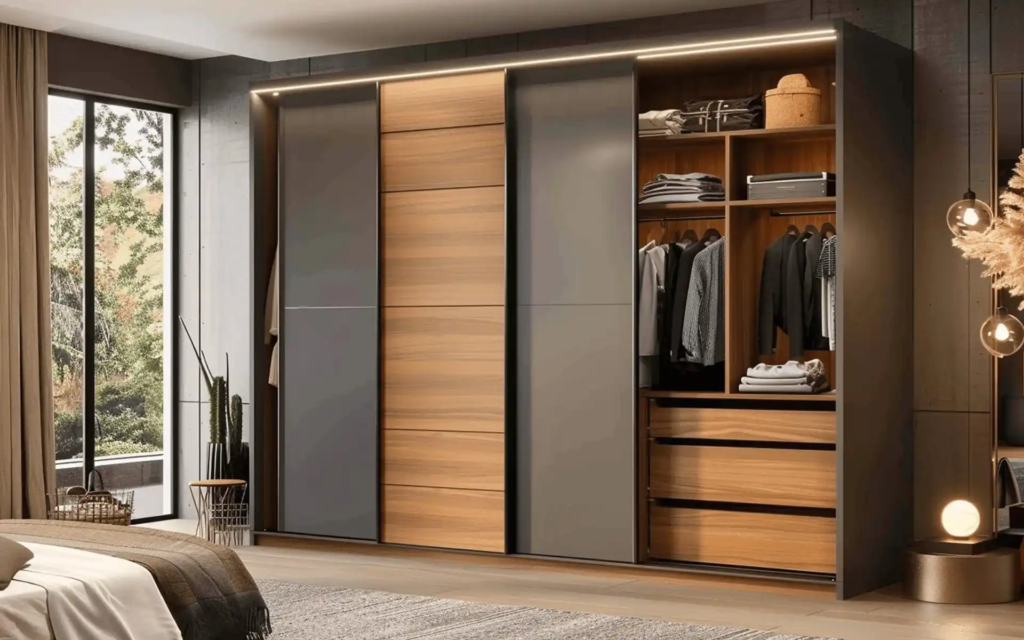
Sliding doors are widely chosen in modern homes because their side-sliding mechanism makes them highly space-efficient. This type of door does not require additional clearance in front of the wardrobe, making it ideal for smaller rooms or compact layouts. Visually, sliding doors create a clean, neat, and modern impression, especially when paired with solid finishes, glass panels, or large mirrors. From a design perspective, sliding doors help form strong lines and a more streamlined appearance. However, since the system runs on tracks, access to the wardrobe is usually limited to one section at a time. This means the internal layout of the wardrobe needs to be carefully planned to remain practical and functional.
Swing Doors
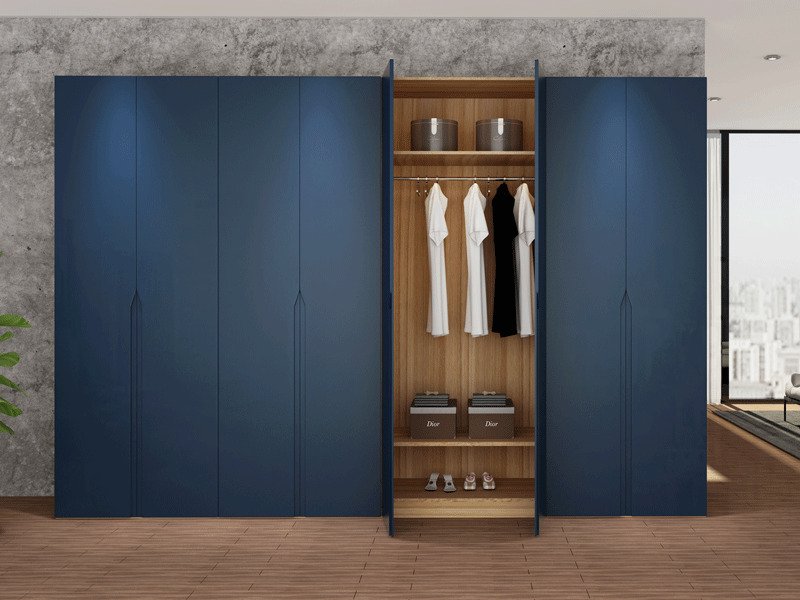
In contrast, swing doors open outward and provide full access to the entire wardrobe at once. This type is better suited for larger spaces, as it requires sufficient clearance in front of the wardrobe for comfortable use. In terms of functionality, swing doors feel more flexible and convenient, especially when storing larger items or organizing the wardrobe as a whole. From a design standpoint, swing doors convey a more solid and substantial presence, which is why they are often used in classic, semi-classic, or timeless interior concepts. With the right choice of materials and finishes, swing doors can also appear modern without feeling rigid.
Ultimately, choosing between sliding doors and swing doors is not about which option is better, but which one best suits the room size, interior style, and user habits. By understanding the character of each door type, wardrobe design can become more optimal, comfortable to use, and visually aligned with the overall spatial concept.
